Introduction: The Future lies Ahead – So What?
Since the present crop of world leaders, these founts of wisdom, politicians, dictators, leaders of giant businesses, bloodthirsty gangs of warriors and their fanatical religious leaders, together with plain, ordinary folk like you and me are soon to depart this world, hopefully to greener pastures, I think it’s only proper for those of us who are leaving family, and younger friends, children and grandchildren behind us, to look them in the eyes and give an honest appraisal of the legacy we are leaving them with, which could be the most significant event, or series of events, in human history.
And what, you wonder, might that be? Medicine? Great, but new plagues keep popping up, like a dog chasing its tail. The electricity grids? Large, modern cities could hardly exist without them, the same goes for water supplies, and the not-as-glamorous sewage systems. Transport – cars and trains and boats and ‘planes? The electronics revolution? – Huge. But we’re missing something here: I didn’t say it had to be for the good, consider this – we have spent the greater part of our lives living in an era that has invented one, and allowed the development of another, phenomenon, either or both of which threatens to send us back to the stone age, or maybe beyond, if we don’t improve our behaviour towards each other, individually, nationally and internationally.
Look your grand-kids in the eyes and tell them about that!! But its true, I’m not saying it’s definitely going to happen, but we’ve got the means to make it happen, and the threats and behaviour of some of our present leaders make it seem like it’s just a matter of time before it does.
1. The first and most immediate threat is nuclear war, and as I’m writing, we are in great danger of this happening. If it does, the lucky ones near the centre of a nuclear attack won’t know anything about it. Among the survivors further out, many will be so badly injured they will wish they hadn’t survived. An outcome which has gained some credibility is that a mini ice-age would occur because of all the dust directly from the nuclear explosions plus the vast quantity of smoke in the atmosphere, caused by the combustion of the fossil fuels in storage facilities being ignited by the bombs, could block the sunlight for an unknown time
About the only thing I can think of at the moment and which would not be practical for many of us, is to live as far as you can away from big cities, military bases, large industrial and mining centres, and build an underground shelter in your back yard!
2. The second threat, global warming, is a very different story, climate change always has been and always will be with us, it’s a natural phenomenon. To avoid confusion, global warming should be viewed as that part of global temperature variation which is caused by human activity, such as burning vast amounts of coal, oil. gas and so on, separated out from the natural variation, and this has been tricky, giving scope for denial. But this is changing as measurements on a global scale are becoming ever more accurate, and the deniers are in retreat. The warming is slow, but it’s getting faster: If steps are not taken to reverse the trend and slow it down it might trigger a process called thermal runaway, which I won’t go into detail about now, because the latest science about this is that it’s unlikely, but it’s something to keep a wary eye on, because, if it happened, it could be worse than nuclear destruction of our civilisation, it could mean a barren, rocky Earth, too hot for any kind of life.
If you’re old and emotionally tough enough, you can get a realistic picture of these catastrophic events from the dozen or so climate change, and more than 20 nuclear attack movies made. The only one I’ve watched all through, “The Day After” has particularly realistic scenes of both the attack happening and the widespread devastation for many miles around the day following the attack.
These are the choices that we ageing dinosaurs are dying and leaving you to deal with: a quick death for the vast majority, followed by (if you’re lucky) years of stone-age living in caves, followed by a long and miserable return to a civilisation technically advanced enough to be able to do it all again, or the other possibility, a temperature increase sufficient to cause food shortages that could lead to widespread starvation, and possibly heat death, for all life on Earth.
We thought we could live a life of ease, on and on,
Exploiting the seas, cutting the trees,
depleting the planet as much as we please,
But now there’s a growing sense of unease,
that if we don’t fry, we might well freeze.
So, at present we face a unique and difficult situation, humanity has never before had the ability to destroy, not just ourselves, but possibly most, or even all, life on Earth. Some responsibility!
Yet we seem to be in denial, so I’ve decided to spend my last few years trying to give some hope to my kids, grand-kids, great grand-kids and other peoples kids, and some encouragement, and some incentive to try and do something about it – but what? That’s why I decided to start this blog, because:
You are young,
and we old dinosaurs will soon be gone,
please try to do better than we’ve done!
Time to face up to it, I don’t expect to win any popularity contests for saying what I feel compelled to say, but here goes:
Nuclear weapons. They are a good place to start – why? Because the other big threat, climate change, happens fairly slowly, it is taking decades for the sceptics to start grudgingly admitting what the Insurance companies already know: more frequent and stronger storms, more temperature records being broken, etc. But for now at least, there’s not the threat that these events will destroy life on Earth any time soon, so we’ve got time to change our energy sources.
Not so with nuclear weapons. These deadly devices can now be delivered, for example, from their launch sites in Eastern Russia to their targets in say, California in about 30 minutes Doesn’t allow much time for negotiations, does it?
These have to go, if all the world’s armies formed two opposing groups in a full-on nuclear battle, we are used to hearing that it would be the end of mankind, but, as with climate science, the research on this nightmare keeps changing. And the present indication is that it would a terrible tragedy, but according to the latest predictions would “only” kill a few billion, say about half, of the worlds 8 billion humans!
So real nuclear disarmament must happen soon – why do I say real? There are fewer nuclear bombs in the world today than there were decades ago – true? Yes, well, a bit true.
A nuke is a nuke, with all it’s pieces in place and ready to be sent on it’s deadly mission in a matter of minutes. So what some countries do to keep their numbers down is take some of them apart, and store the pieces in hidden bunkers or similar, and, magically they only have a half or a quarter the number of (complete) bombs they had before. Politicians on both sides are no doubt quick to claim victory for this “disarmament”!!
So, to be real, disarmament has to be witnessed and verified by trustworthy inspectors, with the authority to go wherever they think these disassembled bomb parts might be lurking. And politicians have to get real and stop trying to kid themselves and us.
The most concerning part of this is that each nuclear armed country most likely has a significant proportion of its nukes ready to launch at short notice, possibly somewhat less than an hour, meaning a response by what’s left of the attacked country’s missiles could be launched about two hours from the beginning of hostilities.
The main part of the war could be over in a few hours, leaving a significant part of our “civilisation” in smoking ruins.
All the above means that it’s better to concentrate our efforts on reducing the worlds stockpiles of nukes. If we can help a little to achieve this then we could move on to try and do something about climate change.
Climate Change. This one is fraught with problems; supplying around 8 Billion people with energy, mainly by burning fossil fuels listed here in order from bad to less bad: Coal, Oil, and Gas, burning these three is the main cause of human induced climate change.
A steady reduction of population is urgently needed to give Earth’s over taxed life support systems, including the climate, a chance to recover.
Any tendency for falling numbers in an economy is met with a frantic response from economists to “correct” the situation, ignoring climate change and all other factors such as the social problems of overcrowding, increasing cost of housing, increasing scarcity of fresh water, failing fisheries, desertification, the resurgence of plagues, which we almost had under control, and increasing crime as food shortages become more severe.
There is hope. In Western style Democracies, where people are allowed to think for themselves, smaller families are becoming normal, and this should be encouraged by government incentives to hurry up the process, instead of met with panic.
In the last years of the 20th century, scientists of various disciplines got together and made estimates of how many people Earth could support sustainably. Real long-term sustainability, not the tailored-to-please-the-government kind, and there is some consensus that the number is between two and four billion, that’s between a half and a quarter of today’s roughly eight billion.
That’s all for now, a thoroughly depressing outlook I know, however that’s not my aim, in my next few contributions (I plan to write about twice a month) I’ll be bringing you some suggestions about how we can help save the World from such a dismal future.
What have we got to lose? – everything, what have we got to gain – maybe a little easing of the widespread sense of hopelessness, or maybe a lot.
I’ve got an idea that might work, at least it’s something we can try, maybe we can even make it fun to see how far we can take it.
Interested? – you’ll have to wait for a week or two ’till I’m ready to launch it. Meantime I’m interested if you’ve got any ideas, comments, or corrections. Send them to me, please. I’d be overjoyed if you could prove I’m being too pessimistic.
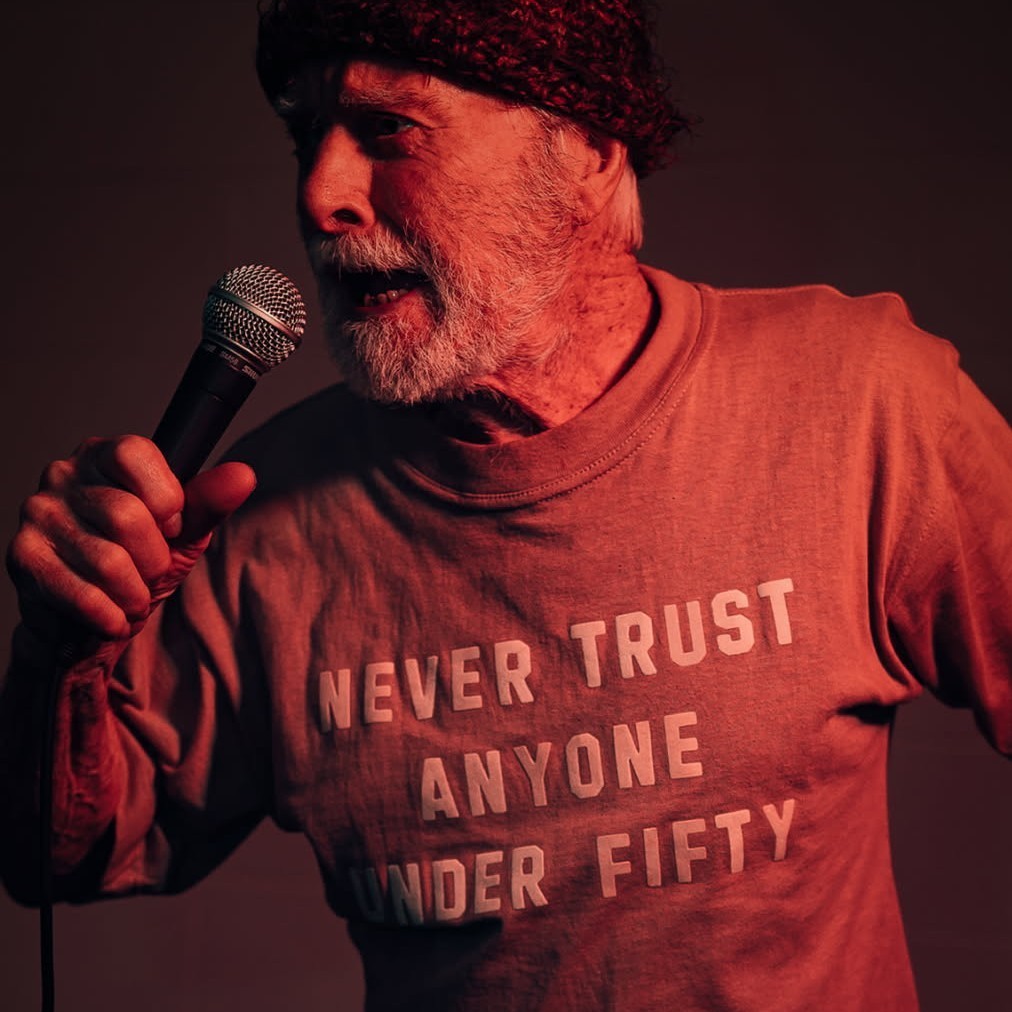


 Silly Old Blogger
I want to hear your thoughts!